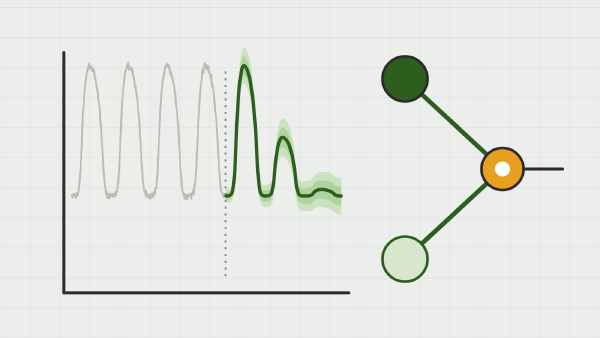
The TSFM tech watch applied to a fictional balance responsible party, on real public data: LightGBM, Chronos-2 and their blend against RTE’s day-ahead forecast, published and debiased. A 2.7% MAPE on the portfolio against 5.6% without a model, a router that does not beat the blend, a cold start handled by the naive forecast, Timestral and TimesFM 3.0 in an addendum, a Dagster service and its replayed monitoring.
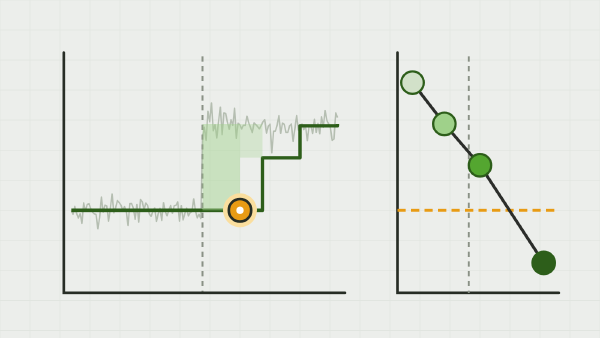
When does a foundation model used without any training beat a model fitted on the series? What I observed over a year of French electricity load, with interval coverage and not only the mean error, then rebuilding a router between the two on 50 series.
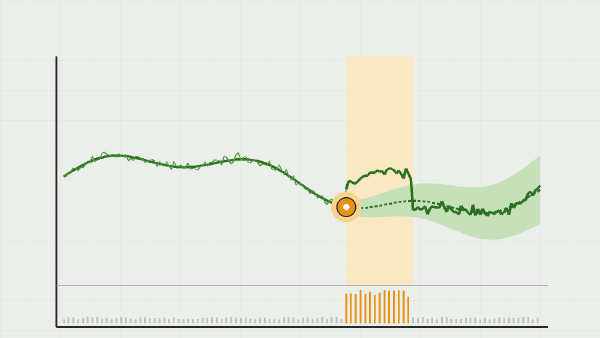
The BSTS counterfactual from the tech watch applied to the promotions of a fictional grocery chain on the Favorita data: campaigns detected rather than assumed, a donor registry, coverage measured on planted truth (0.83 to 0.90 against 0.5 to 0.7 for iid estimators), the earthquake as a test bench, Double ML, a Dagster pipeline and monitoring.
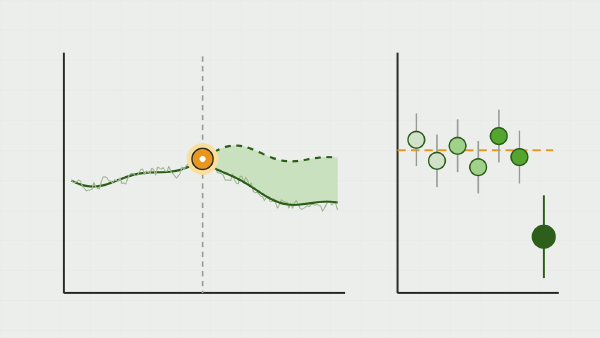
A counterfactual is a forecast. What I observed building one by hand, measuring its coverage on 100 panels with a known truth, planting four violations of the design, and applying it to Volkswagen’s share price after dieselgate.
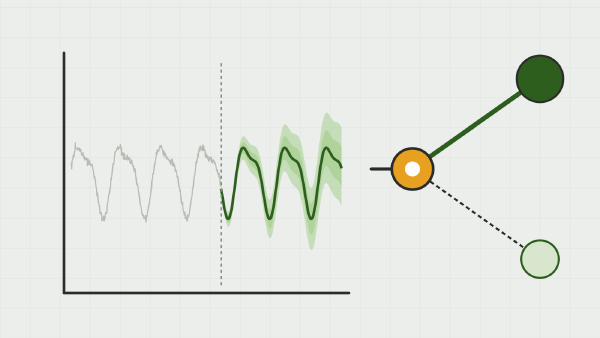
Accuracy, freshness and stability don’t call for the same retraining frequency. What I observed on a ten-policy bench, an analytical model, the Monash electricity data and a causal simulation.
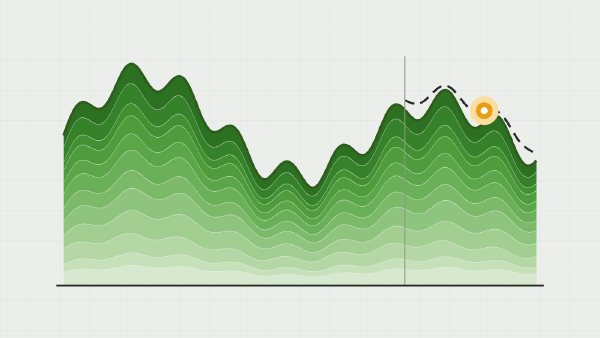
MinT rewritten from scratch, its assumptions tested one by one, and an éCO2mix mini-project (12 regions → France) where bottom-up beats the reference method, over 356 origins, two years and two base models.